-1.png?width=5230&height=1198&name=unnamed%20(4)-1.png "Wayne Stiles")

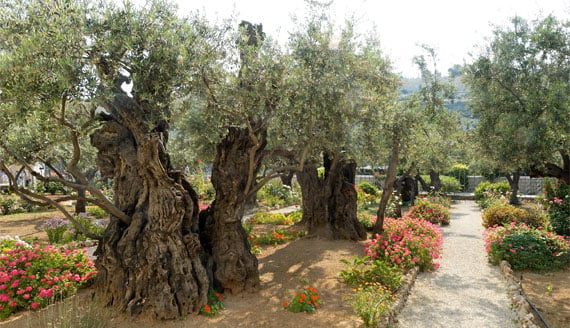
Two gardens in the Bible, Eden and Gethsemane, provided the settings for two choices that brought opposite results. The Bible wildly contrasts these choices. In fact, you face them today.
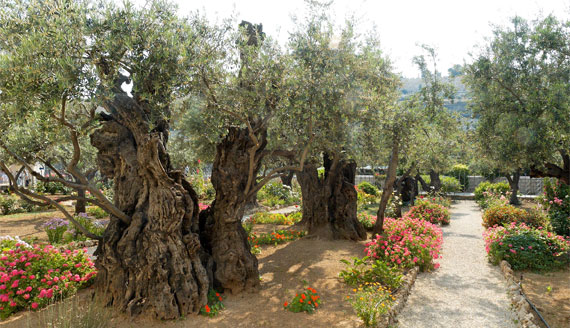
(Photo: The Garden of Gethsemane. Notice the city walls in the distance. Courtesy of the Pictorial Library of Bible Lands)
In the Garden of Eden, Adam’s choice to sin had the potential of bringing condemnation to everyone. In the Garden of Gethsemane, Christ’s decision to die for sins provided potential justification to everyone (Romans 5:18).
Adam never would have eaten the fruit had he known the consequences to himself and his race. But he couldn’t see the results.
All he had was God’s Word and its warning. That’s all we have as well.
2 Gardens in the Bible: Two Choices Then and Now
I’ve never been to the Garden of Eden, but I have seen Gethsemane many times. I’ll never forget standing in the garden for the first time. A stunning insight occurred when I turned around and saw the walls of Jerusalem so close behind Gethsemane. Jesus easily could have seen the soldiers coming to arrest Him. In fact, He said, “Here comes my betrayer!” (Matthew 26:46).
He could see those who would lead Him to death approaching, but still, He chose to stay in the garden out of obedience to the Father—and out of love for us.
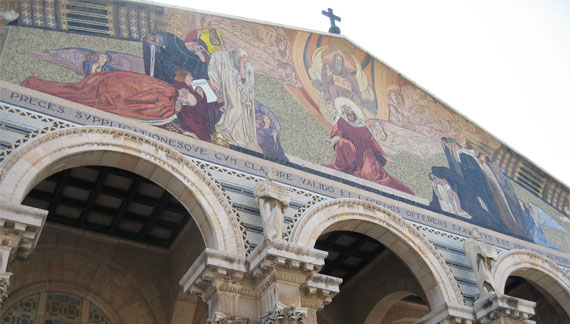
(Photo: The Church of all Nations in the Garden of Gethsemane has a mosaic facade of Jesus praying)
Every day, we walk in the gardens of decision. The two choices in these two gardens in the Bible give us pause to consider our own decisions today:
- Like Adam in the Garden of Eden, we can compromise God’s Word in favor of what we think or feel—and live with overwhelming regret. We don’t have to wonder if this will be our outcome. Adam has shown us it is so.
- Like Jesus in the Garden of Gethsemane, we can take God at His Word—even when it costs us dearly—knowing the Father makes the potential worth the sacrifice. Our choices can produce good beyond imagination.
The Far-Reaching Potential of Our Choices
Our choices today make a huge difference. When a man named Mordecai Ham shared the good news of Jesus to a young boy one day, he had no idea the good that would result. Not many people know Ham’s name, but through his simple faithfulness, God converted Billy Graham. And through Graham—millions.
Anyone can count the seeds in an apple, but only God can count the apples in a seed. Only He knows the potential inside our decisions.
We have to decide moment by moment to fight the good fight and choose the long-term benefits that faithfulness offers.
We have two gardens as proof that faithfulness is worth it.
Tell me what you think: Why do you think there is such tension in our hearts over these two choices—when we know the outcomes? To leave a comment, just click here.
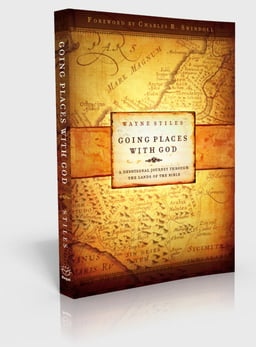 Like This Post? Get the Whole Book!
This post is adapted from Wayne’s book, Going Places with God: A Devotional Journey Through the Lands of the Bible.
• These 90 devotional readings, each based on a specific place in the lands of the Bible, will help you apply the truths of God’s Word to your daily journey of faith.
• You’ll enjoy pertinent Scripture, inspirational quotes, photographs, maps, and a daily prayer.
After going places with God, you’ll never be the same.
Click here to leave a comment.
.jpg?width=350&name=Wayne-books-350wide%20(1).jpg)